Lorem ipsum dolor sit amet, consectetur adipiscing elit lobortis arcu enim urna adipiscing praesent velit viverra sit semper lorem eu cursus vel hendrerit elementum morbi curabitur etiam nibh justo, lorem aliquet donec sed sit mi dignissim at ante massa mattis.
Vitae congue eu consequat ac felis placerat vestibulum lectus mauris ultrices cursus sit amet dictum sit amet justo donec enim diam porttitor lacus luctus accumsan tortor posuere praesent tristique magna sit amet purus gravida quis blandit turpis.
At risus viverra adipiscing at in tellus integer feugiat nisl pretium fusce id velit ut tortor sagittis orci a scelerisque purus semper eget at lectus urna duis convallis. porta nibh venenatis cras sed felis eget neque laoreet suspendisse interdum consectetur libero id faucibus nisl donec pretium vulputate sapien nec sagittis aliquam nunc lobortis mattis aliquam faucibus purus in.
Nisi quis eleifend quam adipiscing vitae aliquet bibendum enim facilisis gravida neque. Velit euismod in pellentesque massa placerat volutpat lacus laoreet non curabitur gravida odio aenean sed adipiscing diam donec adipiscing tristique risus. amet est placerat in egestas erat imperdiet sed euismod nisi.
“Nisi quis eleifend quam adipiscing vitae aliquet bibendum enim facilisis gravida neque velit euismod in pellentesque massa placerat”
Eget lorem dolor sed viverra ipsum nunc aliquet bibendum felis donec et odio pellentesque diam volutpat commodo sed egestas aliquam sem fringilla ut morbi tincidunt augue interdum velit euismod eu tincidunt tortor aliquam nulla facilisi aenean sed adipiscing diam donec adipiscing ut lectus arcu bibendum at varius vel pharetra nibh venenatis cras sed felis eget dolor cosnectur drolo.
There's a familiar story in manufacturing digitalization. Leadership commits to digital work instructions. A six-figure project kicks off. Eight months later, three SOPs have been digitized and the rest of the team has moved on.
It doesn't have to go like that. The fastest way to make digital SOPs real is to ship one, properly, end-to-end, in a single afternoon — and use that one as the template for the next forty.
Pick the right first SOP. Not your most complex procedure. Pick something high-frequency (so feedback is fast), with visible variance between operators (so digital instructions create immediate value), and safe to iterate on (so a small mistake doesn't ship a defect). Good candidates: a setup, a routine cleaning, a shift handover, a non-conformance escalation flow.
Spend 20 minutes on the floor before you write anything. The most common mistake is digitizing the SOP that exists in the binder. The binder is wrong. Walk to the station. Watch the procedure performed twice, by two different operators. Take photos of every key step. Note the steps that aren't in the binder but happen anyway, and the steps in the binder that everyone skips. You're capturing reality, not auditing.
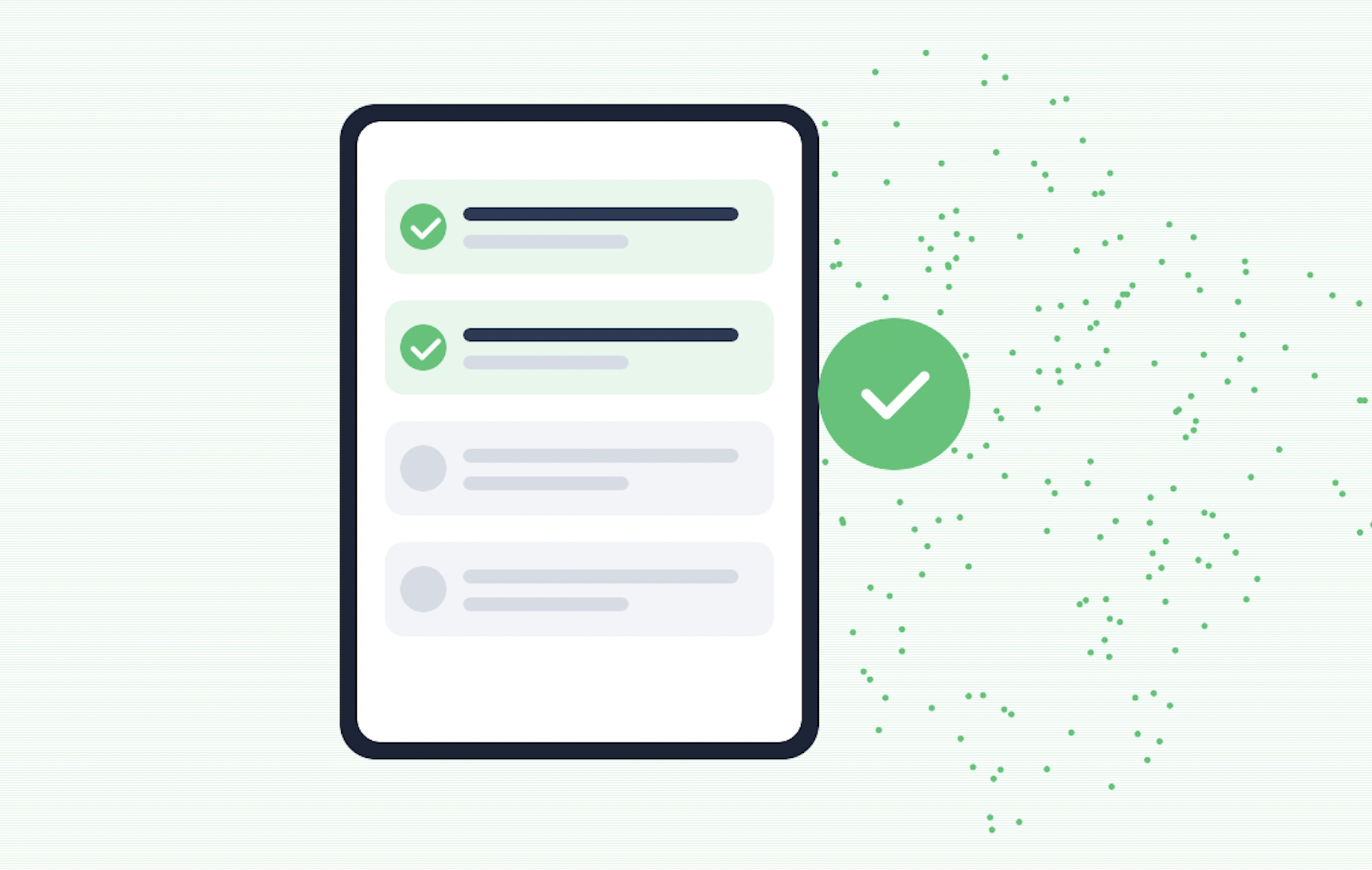
Structure around decisions, not paragraphs. Each step should fit on a phone or tablet screen, contain at most one decision, and have a photo where a photo helps. Where the operator has a choice — "if part has a burr, route to rework" — make the branch explicit. The instruction should react to what the operator sees, not assume they remembered the whole document.
Embed the quality check, don't append it. Most SOPs end with "verify quality." That instruction is decoration. Build the check into the step: "Is the gasket seated flat? [Yes] [No]." This is the moment digital SOPs start paying for themselves. You stop relying on operator memory and start collecting structured data on every confirmation.
Pilot it on one shift, with one operator. Don't roll it out — pilot it. Stand next to the operator while they use the digital SOP for the first time. You will find five things that need to change in the first hour, and that's the point. Fix them all before anyone else sees the SOP.
After two shifts use it without intervention, you have a working digital SOP. After three, you have a template — and the leverage starts. The structure you just built becomes the pattern for everything else. You don't redesign for the next SOP; you copy the pattern and adapt the content. The hardest part is the first hour. Spend it on the floor.
Book a free demo of our application and see how it can take your manufacturing operations to the next level.