Lorem ipsum dolor sit amet, consectetur adipiscing elit lobortis arcu enim urna adipiscing praesent velit viverra sit semper lorem eu cursus vel hendrerit elementum morbi curabitur etiam nibh justo, lorem aliquet donec sed sit mi dignissim at ante massa mattis.
Vitae congue eu consequat ac felis placerat vestibulum lectus mauris ultrices cursus sit amet dictum sit amet justo donec enim diam porttitor lacus luctus accumsan tortor posuere praesent tristique magna sit amet purus gravida quis blandit turpis.
At risus viverra adipiscing at in tellus integer feugiat nisl pretium fusce id velit ut tortor sagittis orci a scelerisque purus semper eget at lectus urna duis convallis. porta nibh venenatis cras sed felis eget neque laoreet suspendisse interdum consectetur libero id faucibus nisl donec pretium vulputate sapien nec sagittis aliquam nunc lobortis mattis aliquam faucibus purus in.
Nisi quis eleifend quam adipiscing vitae aliquet bibendum enim facilisis gravida neque. Velit euismod in pellentesque massa placerat volutpat lacus laoreet non curabitur gravida odio aenean sed adipiscing diam donec adipiscing tristique risus. amet est placerat in egestas erat imperdiet sed euismod nisi.
“Nisi quis eleifend quam adipiscing vitae aliquet bibendum enim facilisis gravida neque velit euismod in pellentesque massa placerat”
Eget lorem dolor sed viverra ipsum nunc aliquet bibendum felis donec et odio pellentesque diam volutpat commodo sed egestas aliquam sem fringilla ut morbi tincidunt augue interdum velit euismod eu tincidunt tortor aliquam nulla facilisi aenean sed adipiscing diam donec adipiscing ut lectus arcu bibendum at varius vel pharetra nibh venenatis cras sed felis eget dolor cosnectur drolo.
If you've sat in a digital transformation steering committee lately, you've probably noticed a quieter mood. The conversation that two years ago was full of predictive maintenance pilots and computer vision proofs-of-concept has cooled. Many of those pilots ran. Most didn't scale. The result is what some plant leaders now call Industry 4.0 fatigue.
This isn't a failure of the technology. It's a failure of where the technology gets pointed.
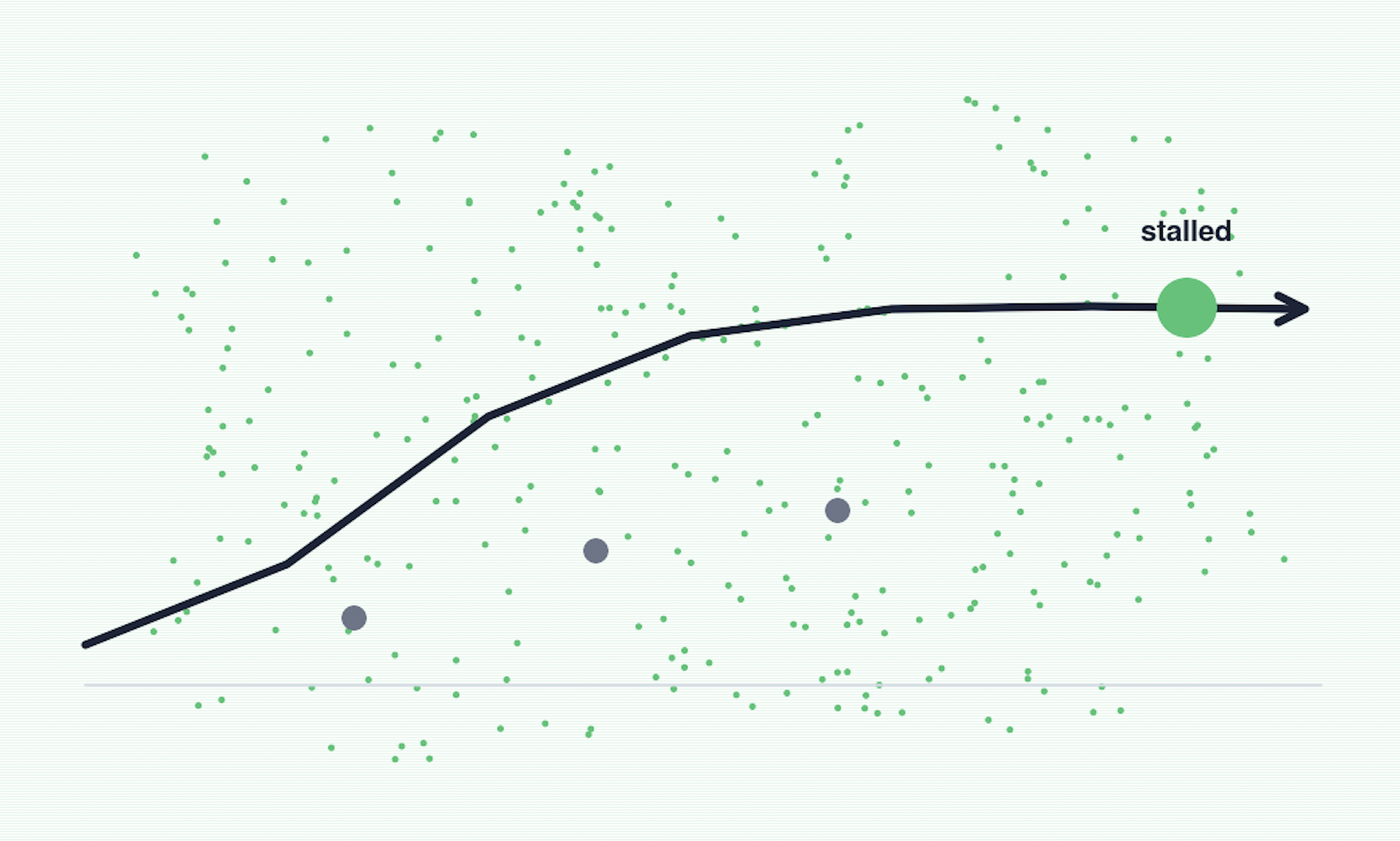
Stalled manufacturing AI projects look very similar. The team picks an exciting use case. The pilot is technically successful. A paper is presented to leadership. Nothing rolls out.
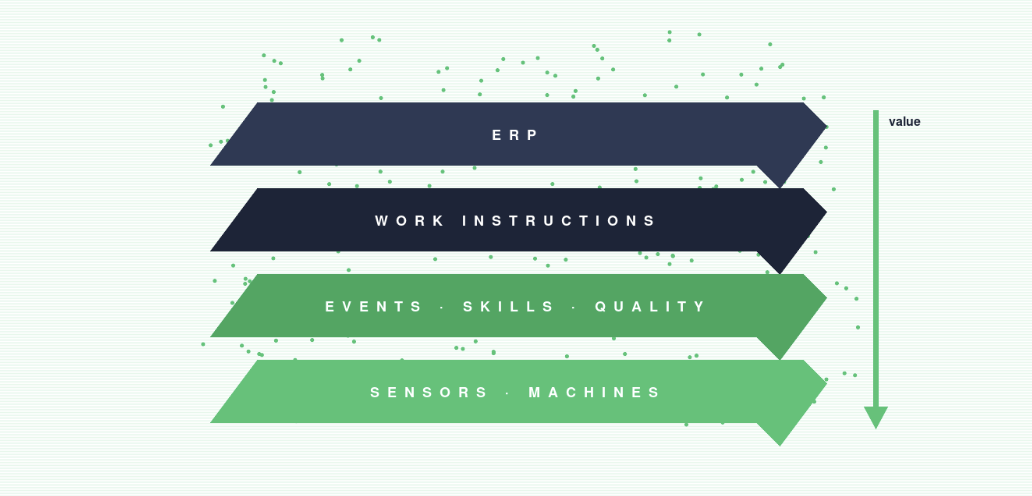
The reason is rarely model accuracy. The reason is that the rest of the operating system isn't ready to act on the model's output. The maintenance team's workflow doesn't change because there's no integrated way to dispatch on the model's signal. The quality team doesn't change its process because the operator has no instruction to follow when the system flags a part. The model is a good answer to a question the operation isn't yet equipped to ask.
Three honest reasons projects stall:
Missing operating link. The model produced a signal, but the workflow had no place to receive it. If predictive maintenance flags a bearing, who gets the work order? Through what system? With what priority? If those answers aren't nailed down before go-live, the signal becomes another email that gets ignored.
Data that isn't structured enough. Most manufacturing data is event-rich and context-poor. We know the machine stopped. We don't know which operator was running it, which fixture was loaded, which recipe was active. Without that context, the model learns the wrong thing or learns nothing reliably.
Operator trust. A model the operator can't understand and can't override gets gamed or ignored. Trust grows when the model demonstrably improves the operator's day. It collapses when it doesn't.
The projects that did move from pilot to plant-wide rollout share four traits: they plugged into a workflow that was already digital; they had a clear and small first signal with a named owner; they closed the loop with the operator; and they were boring about ROI.
Three questions to ask before the next pilot. What is the operating workflow this AI is supposed to plug into, and is it digital today? Who, by name, will receive the model's output and act on it? What does the feedback loop look like?
Industry 4.0 isn't dead. The fatigue is pointing at the right thing: technology without operational readiness is theatre.
Book a free demo of our application and see how it can take your manufacturing operations to the next level.