Lorem ipsum dolor sit amet, consectetur adipiscing elit lobortis arcu enim urna adipiscing praesent velit viverra sit semper lorem eu cursus vel hendrerit elementum morbi curabitur etiam nibh justo, lorem aliquet donec sed sit mi dignissim at ante massa mattis.
Vitae congue eu consequat ac felis placerat vestibulum lectus mauris ultrices cursus sit amet dictum sit amet justo donec enim diam porttitor lacus luctus accumsan tortor posuere praesent tristique magna sit amet purus gravida quis blandit turpis.
At risus viverra adipiscing at in tellus integer feugiat nisl pretium fusce id velit ut tortor sagittis orci a scelerisque purus semper eget at lectus urna duis convallis. porta nibh venenatis cras sed felis eget neque laoreet suspendisse interdum consectetur libero id faucibus nisl donec pretium vulputate sapien nec sagittis aliquam nunc lobortis mattis aliquam faucibus purus in.
Nisi quis eleifend quam adipiscing vitae aliquet bibendum enim facilisis gravida neque. Velit euismod in pellentesque massa placerat volutpat lacus laoreet non curabitur gravida odio aenean sed adipiscing diam donec adipiscing tristique risus. amet est placerat in egestas erat imperdiet sed euismod nisi.
“Nisi quis eleifend quam adipiscing vitae aliquet bibendum enim facilisis gravida neque velit euismod in pellentesque massa placerat”
Eget lorem dolor sed viverra ipsum nunc aliquet bibendum felis donec et odio pellentesque diam volutpat commodo sed egestas aliquam sem fringilla ut morbi tincidunt augue interdum velit euismod eu tincidunt tortor aliquam nulla facilisi aenean sed adipiscing diam donec adipiscing ut lectus arcu bibendum at varius vel pharetra nibh venenatis cras sed felis eget dolor cosnectur drolo.
The past few years have been a period of unprecedented change for the manufacturing industry. Supply chain disruptions, labor shortages, and rapid technological advancements have forced a shift from rigid, traditional operations to agile, digitally-enabled models. As we look ahead to 2026, this pace of transformation shows no signs of slowing down. The manufacturers who will thrive are those who not only adopt new technologies but strategically integrate them to build a more resilient, efficient, and intelligent operation. This journey extends far beyond the production line itself.
Based on our insights from the frontlines of digital transformation, here are four key trends that will define the manufacturing landscape in the coming year.
For decades, the goal of supply chain management was singular: efficiency through lean, just-in-time systems. While this model cut costs, the global events of recent years revealed its profound fragility. In 2026, manufacturers will prioritize resilience, moving toward more diversified, localized, and transparent supply chains. AI will be the engine of this shift. By analyzing vast datasets—from geopolitical risks to logistics bottlenecks—AI will enable companies to predict disruptions and automatically adjust supply routes, sourcing, and inventory levels. This isn't just a defensive strategy; it’s an offensive one. A resilient supply chain becomes a competitive advantage, ensuring a consistent flow of materials and products when others cannot deliver.
Sustainability has transitioned from a corporate checkbox to a core business driver. While many companies now report on ESG metrics, the next frontier is leveraging AI to make genuine, measurable progress. In 2026, we’ll see a push for "green operations" that are not just environmentally friendly but also more profitable. AI will be used to optimize energy consumption in real-time, reduce material waste by detecting inefficiencies in processes, and streamline logistics to minimize carbon footprint. By capturing and analyzing granular data on resource use, companies can move beyond broad goals and make precise, data-driven changes that benefit both the planet and the bottom line. The result is a more efficient factory that also serves as a model of environmental responsibility.
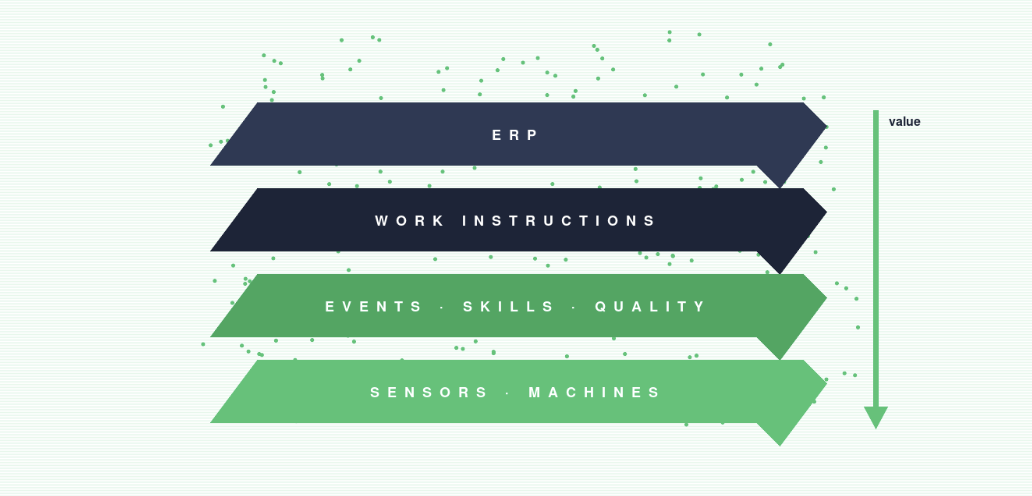
The skills gap is a persistent challenge. As technology advances, the need to upskill and train the workforce becomes critical. In 2026, we'll see AI move beyond simply providing digital work instructions and into a more holistic role in workforce management. AI-powered platforms will analyze operational data to identify specific skill gaps on a team, recommend targeted training modules, and even optimize staffing schedules based on demand and individual worker proficiency. This provides a clear, data-driven path to a more productive and engaged workforce. It ensures that every employee is not just performing their job, but is also continuously learning and evolving alongside the technology.
Generative AI, which has dominated headlines for its creative applications, will begin to find its footing in manufacturing. While we're still in the early stages, 2026 will be the year companies start experimenting with its potential for process optimization. Imagine using Generative AI to design a new, more efficient workflow based on a set of operational constraints, or to create a detailed, visual training video for a complex procedure with minimal human input. This technology has the potential to accelerate a manufacturer's ability to innovate and adapt, allowing for rapid ideation and testing of new processes in a digital environment before they are implemented on the factory floor.
These trends are not isolated; they are interconnected and build on one another. The push for a more sustainable supply chain relies on the data captured by a digital factory, and the implementation of these new technologies requires a more skilled and strategically managed workforce. At Stryza, we are building the platform that connects these trends, enabling manufacturers to not only participate in the future but to lead it. The time to act is now—the future is already here.
Book a free demo of our application and see how it can take your manufacturing operations to the next level.