Lorem ipsum dolor sit amet, consectetur adipiscing elit lobortis arcu enim urna adipiscing praesent velit viverra sit semper lorem eu cursus vel hendrerit elementum morbi curabitur etiam nibh justo, lorem aliquet donec sed sit mi dignissim at ante massa mattis.
Vitae congue eu consequat ac felis placerat vestibulum lectus mauris ultrices cursus sit amet dictum sit amet justo donec enim diam porttitor lacus luctus accumsan tortor posuere praesent tristique magna sit amet purus gravida quis blandit turpis.
At risus viverra adipiscing at in tellus integer feugiat nisl pretium fusce id velit ut tortor sagittis orci a scelerisque purus semper eget at lectus urna duis convallis. porta nibh venenatis cras sed felis eget neque laoreet suspendisse interdum consectetur libero id faucibus nisl donec pretium vulputate sapien nec sagittis aliquam nunc lobortis mattis aliquam faucibus purus in.
Nisi quis eleifend quam adipiscing vitae aliquet bibendum enim facilisis gravida neque. Velit euismod in pellentesque massa placerat volutpat lacus laoreet non curabitur gravida odio aenean sed adipiscing diam donec adipiscing tristique risus. amet est placerat in egestas erat imperdiet sed euismod nisi.
“Nisi quis eleifend quam adipiscing vitae aliquet bibendum enim facilisis gravida neque velit euismod in pellentesque massa placerat”
Eget lorem dolor sed viverra ipsum nunc aliquet bibendum felis donec et odio pellentesque diam volutpat commodo sed egestas aliquam sem fringilla ut morbi tincidunt augue interdum velit euismod eu tincidunt tortor aliquam nulla facilisi aenean sed adipiscing diam donec adipiscing ut lectus arcu bibendum at varius vel pharetra nibh venenatis cras sed felis eget dolor cosnectur drolo.
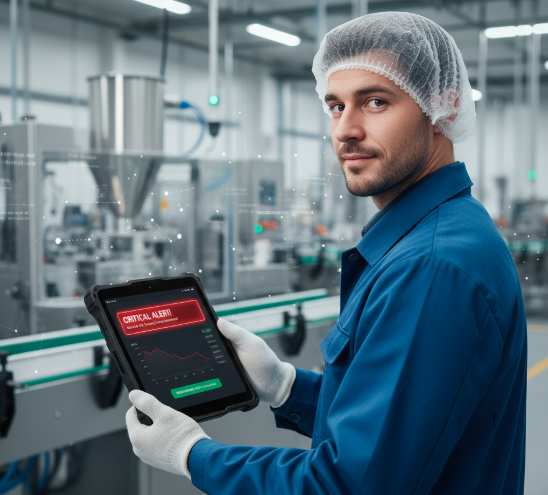
The modern factory floor is a complex, data-rich environment. Frontline workers are tasked with a multitude of responsibilities: monitoring intricate machinery, following multi-step safety protocols, troubleshooting technical issues, and maintaining high-speed production. This immense demand on a worker's mental capacity is known as cognitive load. When this load is high, it can lead to stress, fatigue, and an increased likelihood of human error—all of which have direct and costly consequences for productivity and safety.
While automation has long been a solution for repetitive physical tasks, the next frontier in operational efficiency is using technology to manage and reduce cognitive load, thereby empowering the human element rather than replacing it.
For years, the issue of cognitive overload on the factory floor was largely unaddressed. An operator would be expected to recall complex procedures from memory, manually cross-reference data from multiple sources, and make split-second decisions—all without a support system. This reliance on fragmented information and human memory creates a high potential for error, slows down training for new hires, and makes it difficult to maintain a consistent standard of quality. The consequence is not just a mistake but a ripple effect of rework, unplanned downtime, and decreased morale.
AI-powered digital platforms are designed to serve as an intelligent co-pilot, seamlessly managing the information and tasks that create cognitive overload. They function by taking a strategic approach to information delivery, ensuring the right information is presented to the right person at the exact moment it's needed, without any distractions.
Reducing cognitive load is not just a feel-good initiative; it drives tangible business results.
The future of manufacturing efficiency lies not in simply automating physical tasks but in intelligently supporting the human mind. By leveraging AI to reduce cognitive load, manufacturers can unlock the full potential of their workforce, enabling them to make better decisions, solve more complex problems, and truly thrive in a digitally-enabled world.
Book a free demo of our application and see how it can take your manufacturing operations to the next level.