Lorem ipsum dolor sit amet, consectetur adipiscing elit lobortis arcu enim urna adipiscing praesent velit viverra sit semper lorem eu cursus vel hendrerit elementum morbi curabitur etiam nibh justo, lorem aliquet donec sed sit mi dignissim at ante massa mattis.
Vitae congue eu consequat ac felis placerat vestibulum lectus mauris ultrices cursus sit amet dictum sit amet justo donec enim diam porttitor lacus luctus accumsan tortor posuere praesent tristique magna sit amet purus gravida quis blandit turpis.
At risus viverra adipiscing at in tellus integer feugiat nisl pretium fusce id velit ut tortor sagittis orci a scelerisque purus semper eget at lectus urna duis convallis. porta nibh venenatis cras sed felis eget neque laoreet suspendisse interdum consectetur libero id faucibus nisl donec pretium vulputate sapien nec sagittis aliquam nunc lobortis mattis aliquam faucibus purus in.
Nisi quis eleifend quam adipiscing vitae aliquet bibendum enim facilisis gravida neque. Velit euismod in pellentesque massa placerat volutpat lacus laoreet non curabitur gravida odio aenean sed adipiscing diam donec adipiscing tristique risus. amet est placerat in egestas erat imperdiet sed euismod nisi.
“Nisi quis eleifend quam adipiscing vitae aliquet bibendum enim facilisis gravida neque velit euismod in pellentesque massa placerat”
Eget lorem dolor sed viverra ipsum nunc aliquet bibendum felis donec et odio pellentesque diam volutpat commodo sed egestas aliquam sem fringilla ut morbi tincidunt augue interdum velit euismod eu tincidunt tortor aliquam nulla facilisi aenean sed adipiscing diam donec adipiscing ut lectus arcu bibendum at varius vel pharetra nibh venenatis cras sed felis eget dolor cosnectur drolo.
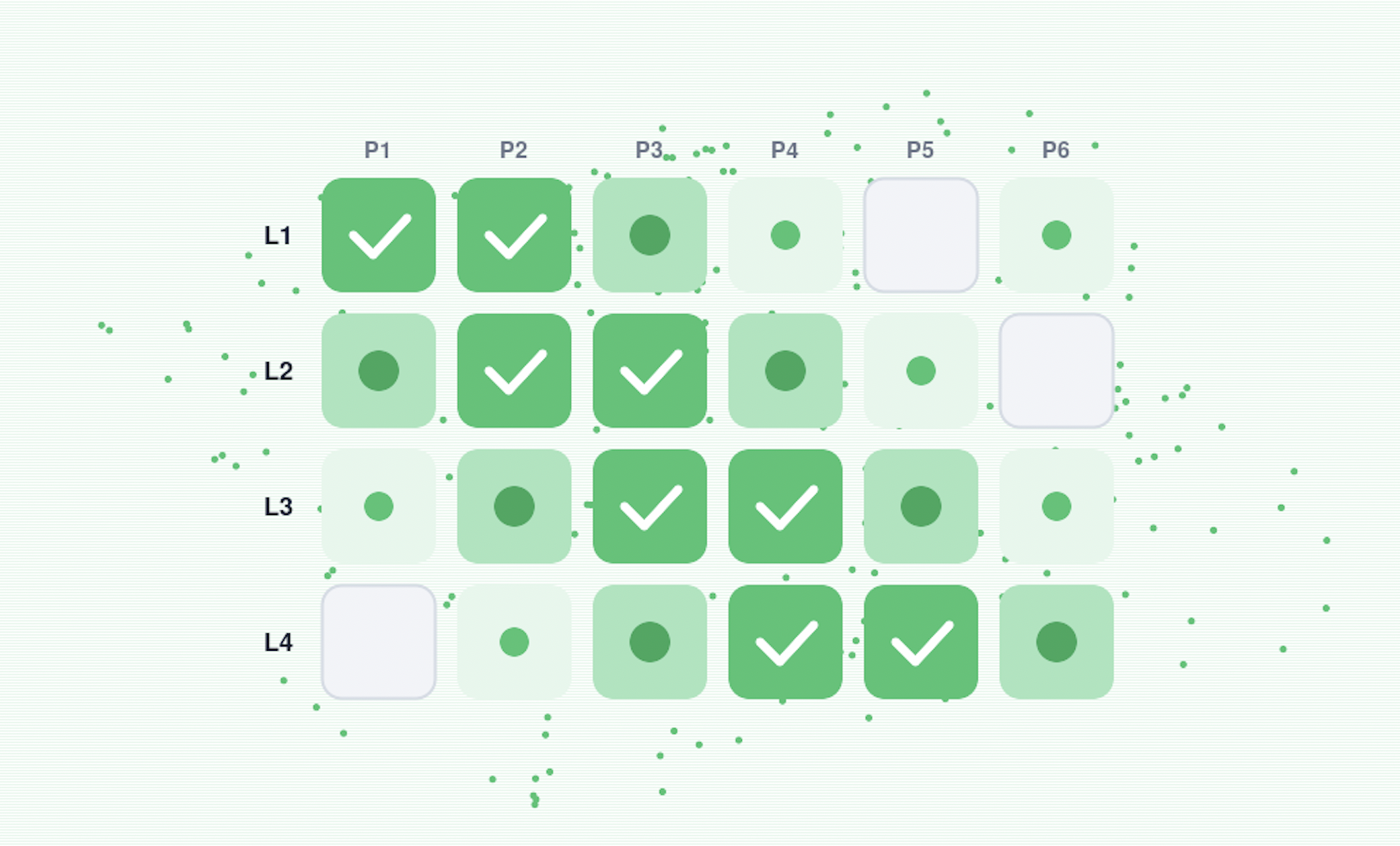
A competency matrix is supposed to answer one question: do we have the right skills, in the right places, to run this plant tomorrow? In most facilities the answer lives in a spreadsheet that's updated quarterly at best. By the time you read it, it's stale.
A working matrix is different. It's a live picture of who can do what, at what level, on which station, with what currency — and it tells you what to do next.
Start with stations, not people. The most common mistake is listing people down the left side and skills across the top. Reverse it. Start with the stations you need to staff. For each, list the skills required to run it independently, under supervision, and to train someone else. A people-first matrix tells you what each person can do. A station-first matrix tells you whether you can run the plant.
Use a small, honest skill scale. Five-point scales sound rigorous and produce mush. Use four levels with behavioral definitions: Trainee (cannot perform alone), Qualified (safe and to standard on a normal day), Proficient (handles exceptions and variants), Trainer (can teach and certify others). Harder to game, more meaningful when read.
Add currency, not just level. A matrix showing only level is half a matrix. Skills are perishable. Every cell needs three pieces of information: level, last performed, certification expiry. If any are blank or red, the matrix is showing you something to act on.
Make it line-of-sight for the supervisor. A matrix that lives in HR, accessed quarterly, doesn't change behavior. The shift supervisor needs it before they staff. It belongs on the planning screen, the daily standup, the line walk phone. The test: can the supervisor look at tomorrow's lineup and know whether all stations are covered by qualified, currently-certified operators?
Tie it to the workflow data. The most powerful version isn't manually maintained. It updates from real activity. When an operator completes a guided procedure, that's evidence of currency. When they handle an exception, evidence of proficiency. When they sign off training, evidence of trainer-level capability. Stop relying on quarterly self-assessment. Get an evidence-based picture instead.
Surface the gaps, not just the state. Three views matter: coverage gaps (stations under-staffed for the next four weeks), single-threaded skills (stations with only one trainer-level operator — succession risk), and expiring currency (certifications dropping in the next 30 days). A matrix that surfaces these makes training decisions for you.
Don't build the perfect matrix. Build the one that gets used. Small enough to maintain. Structured enough to query. Connected enough to the work that it doesn't depend on someone updating it by hand.
Book a free demo of our application and see how it can take your manufacturing operations to the next level.