Lorem ipsum dolor sit amet, consectetur adipiscing elit lobortis arcu enim urna adipiscing praesent velit viverra sit semper lorem eu cursus vel hendrerit elementum morbi curabitur etiam nibh justo, lorem aliquet donec sed sit mi dignissim at ante massa mattis.
Vitae congue eu consequat ac felis placerat vestibulum lectus mauris ultrices cursus sit amet dictum sit amet justo donec enim diam porttitor lacus luctus accumsan tortor posuere praesent tristique magna sit amet purus gravida quis blandit turpis.
At risus viverra adipiscing at in tellus integer feugiat nisl pretium fusce id velit ut tortor sagittis orci a scelerisque purus semper eget at lectus urna duis convallis. porta nibh venenatis cras sed felis eget neque laoreet suspendisse interdum consectetur libero id faucibus nisl donec pretium vulputate sapien nec sagittis aliquam nunc lobortis mattis aliquam faucibus purus in.
Nisi quis eleifend quam adipiscing vitae aliquet bibendum enim facilisis gravida neque. Velit euismod in pellentesque massa placerat volutpat lacus laoreet non curabitur gravida odio aenean sed adipiscing diam donec adipiscing tristique risus. amet est placerat in egestas erat imperdiet sed euismod nisi.
“Nisi quis eleifend quam adipiscing vitae aliquet bibendum enim facilisis gravida neque velit euismod in pellentesque massa placerat”
Eget lorem dolor sed viverra ipsum nunc aliquet bibendum felis donec et odio pellentesque diam volutpat commodo sed egestas aliquam sem fringilla ut morbi tincidunt augue interdum velit euismod eu tincidunt tortor aliquam nulla facilisi aenean sed adipiscing diam donec adipiscing ut lectus arcu bibendum at varius vel pharetra nibh venenatis cras sed felis eget dolor cosnectur drolo.
If you ask a manufacturing leader what their work instructions cost, they'll usually say close to zero. The binders are already printed. The PDFs are already on the network drive. The cost is sunk.
This is one of the most expensive accounting errors in operations.
The cost isn't in the documents themselves. It's in everything those documents fail to do. Unstructured here means three things: instructions live as text and screenshots rather than discrete executable steps; they don't capture the operator's actions; and they can't easily be updated and re-deployed.
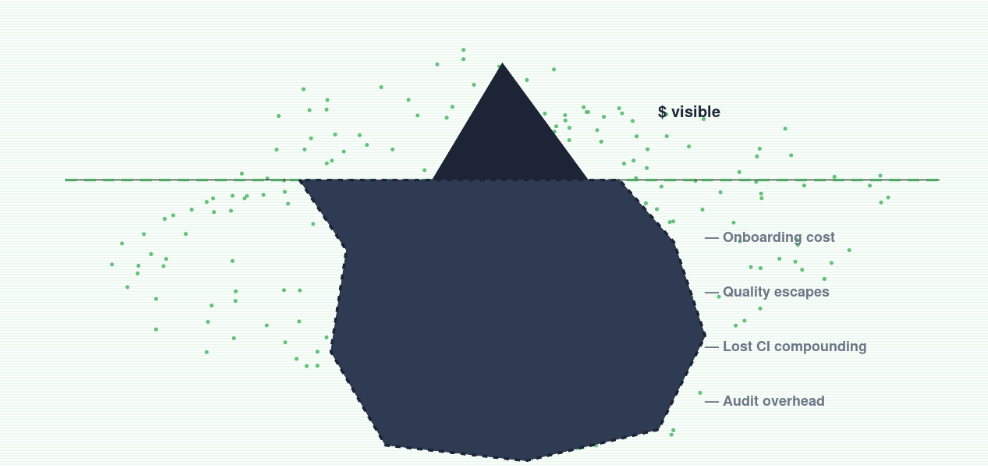
Onboarding takes longer than it should. A new operator following an unstructured instruction needs an interpreter — usually a senior operator who could otherwise be running the line. Plants quietly absorb this as "training time," but it's two costs: the senior's lost production, and the slower ramp of the new hire. A structured digital instruction interprets itself, freeing the senior for cases that actually need experience.
Quality escapes have an instruction component. A meaningful share of "operator error" defects in most plants are actually instruction insufficiency defects. "Verify quality" at the end of a paragraph is hoping the operator remembers what to verify. Structured instructions with embedded checks at the moment of risk don't rely on memory. The defect mode that the operator forgot to look for becomes the check the system asks them to confirm.
Continuous improvement gets stuck. Plants invest heavily in CI, and most improvements never get codified. The operator finds a better way. The supervisor agrees. The PDF doesn't change. The next shift does it the old way. With structured digital instructions, updating is quick and the new version reaches every shift the next time they pick up the device. Improvements compound.
Audit cost is a bigger iceberg than it looks. With unstructured documentation, audit prep is mostly manual. With structured digital instructions, "who ran what version after which training" becomes a query. Plants that have done the conversion describe it as "the audit got smaller."
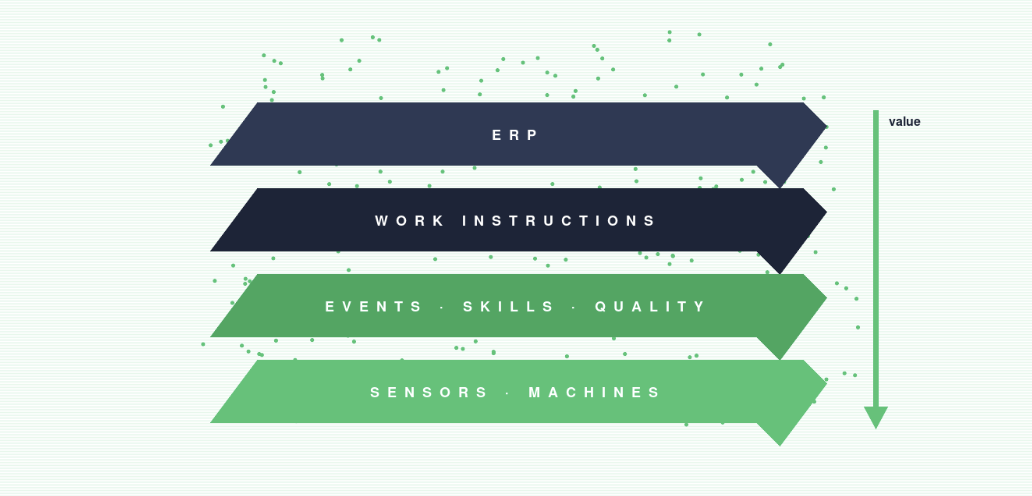
The biggest hidden cost is optionality. Unstructured instructions trap a plant in a pre-digital operating model. AI-assisted exception handling can't plug into a paper SOP. Predictive maintenance can't dispatch through a wall-poster. A skills-based scheduling system can't query a binder. Every digital initiative assumes the procedure layer is structured. When it isn't, those initiatives stall — not because the technology is wrong, but because the foundation is wrong.
The accounting is unfamiliar because the cost has always been hidden. The operations leaders making the move are doing the math anyway, and getting uncomfortable with what it shows.
Book a free demo of our application and see how it can take your manufacturing operations to the next level.